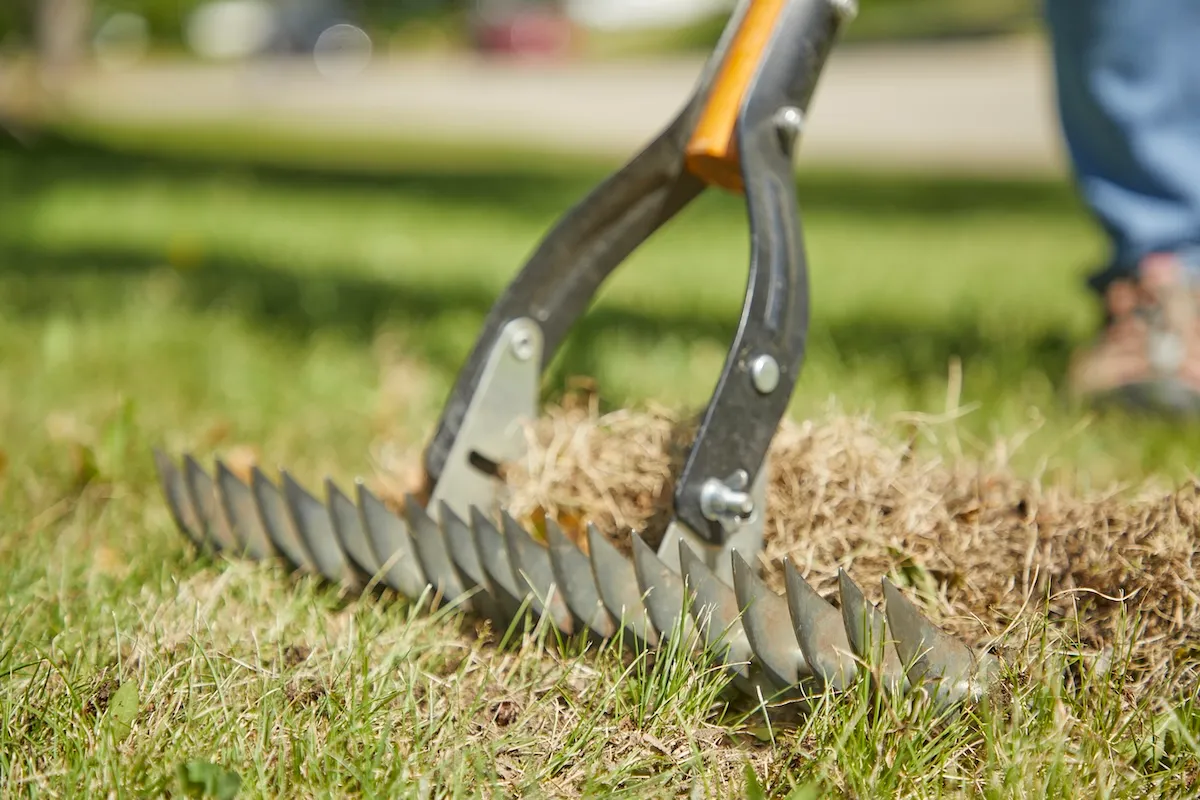
Did you know that removing dead organic matter called thatch from your grass will improve lawn airflow and support better growth? That’s because with heavy foot traffic on your lawn, slow decomposition, and compaction, thatch builds up around the grassroots.
Dethatching a thick lawn helps open up the soil and improve nutrient floe, strengthening your lawn against pests and diseases. This lawn thatch removal requires careful skills to ensure you maintain a green turf without damaging your ecosystem.
Here are easy dethatching tips to promote healthy grass growth and make your lawn the envy of your neighborhood.
What Thatch Is and Why It Becomes a Problem
As a beginner, “thatching” may sound foreign to you, so here’s an overview for a better understanding of the problem.
What is Lawn Thatch?
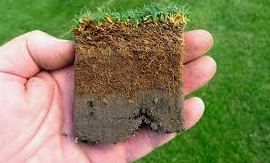
Lawn thatch is an accumulation of dead grass, living grass, and other organic debris formed between grass blades at the soil surface.
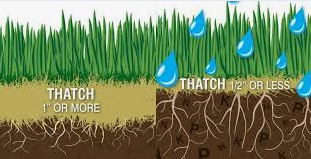
Having thin layers of thatch on your grass is normal and even beneficial because it’s a form of organic mulch to insulate your soil. However, excessive thatching, thicker than a ½ inch layer, leads to severe soil and root problems.
Tackling Excessive Thatch Issues
Thick thatching blocks nutrient flow, leading yo stunted, unhealthy grass growth. So, you must tackle its buildup with lawn maintenance basics such as debris clearing, mowing, aeration, watering, fertilization, and weeding.
Key Signs Your Lawn Needs Dethatching
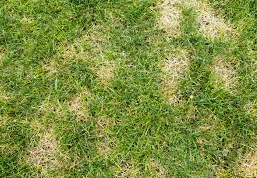
Once you can identify common signs of thatch buildup, it’ll be easy to manage and avoid it. Thatching shows visual and physical symptoms that appear through these common lawn stress indicators:
- Yellowing and browning grass patches
- Spongy lawn turf
- Unusually soft grass layers
- Poor moisture absorption leading to pools or runoffs
- Visible layers beneath the grass carpets
- Dry spots
- Rampant pests and diseases
Besides the physical indicators, it’s always best to test your lawn regularly with a comprehensive turf health check.
Start with basic tests like walking around to feel the texture, then make an advanced test by digging 2-3 inches deep into the turf to see the soil composition beneath your grass. These tests would let you know when to dethatch your lawn.
Why Dethatching Boosts Lawn Health
Here are some dethatching benefits for your lawn:
Deeper Root Growth
Dethatch your lawn to improve root growth, as without the blockage from clumped thatch, nutrients would flow more easily and give your roots more space to extend.
Improves Moisture Absorption
Dethatching aids better lawn moisture access because there’s improved drainage and more space to absorb liquids, whether it’s water or fertilizer for growth.
Greener Grass Growth
The consequences of deeper roots and imrooved moisture absorption from dethatching is having greener lawn results. Think about it for a moment. When your grass has deeper roots, it becomes more resilient to foot traffic, while better moisture retention makes it drought-resistant. So, you’ll have a thicker, greener, lush lawn.
The Best Time of Year to Dethatch Your Lawn
Another part of knowing when to dethatch your lawn focuses on seasonal timing for better recovery. Choosing the right season for thatch maintenance is about optimizing your lawn recovery timing to ensure the weather works in favor of your grass’s natural growth cycle. If you know anything about seasonal lawn care, now’s the time to use it, but if you don’t have an idea, it’s also fine. Keep reading for a summary of cool vs warm season grass types, including their differences.
| Cool Season Grass (Kentucky Bluegrass, Fescue and Ryegrass) | Warm Season Grass (Bermuda, Zoysia, and St. Augustine) | |
| Best Time | Early Spring | Late Spring |
| Second Best Time | Early Fall | Early Summer |
| Recovery Benefits | There’s moderate temperature with enough moisture ahead of summer heat and winter cold. | There’s quick growth to cover bare spots and keep the soil from burning or freezing. |
Avoid dethatching your lawn during dormancy, extreme heat, cold, or drought.
Tools and Equipment for Effective Dethatching
Use specific, appropriate dethatching tools for greater efficiency. Consider how much thatch has built up on your lawn before choosing the right tool to remove it with this lawn equipment guide.
Basic Thatching
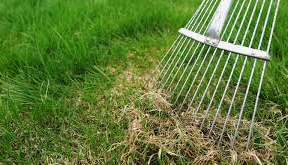
If you have a small lawn area with minimal buildup, you can use a manual dethatching rake or a standard rake to loosen the thatch and remove it from your grass. The dethatching rake has unique tines for digging and removing thatch.
Complex Thatching
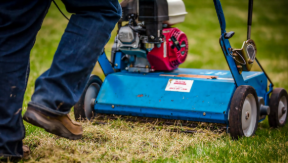
For medium- to large-sized lawns with thatch, you’ll need a power dethatcher, a mower, and gloves for safety. Power dethatchers can be attached to mowers or used as standalone tools with motor driven blades.
Wear protective gloves when operating a power dethatcher to avoid injury.
Step-by-Step Guide to Dethatching a Thick Lawn
Here’s an easy step-by-step guide on how to dethatch lawns no matter the size.
Step One: Clearing
Remove debris from your lawn before you start working in the area to prevent damage to your tools.
Step Two: Mowing
Use a lawn mower to reduce the grass height to about 2 inches above ground for better access to the roots when dethatching.
Step Three: Watering
Moisten your thatch layer by watering the lawn to loosen the clumps before going in with your tool.
Step Four: Dethatch
Set up your ideal dethatching tool and make your passes across the lawn. Make parallel movements from one ned to the other, then repeat the process across. When following these dethatching steps, ensure you make consistent passes across the lawn for efficient, even thatch removal.
Step Five: Collection
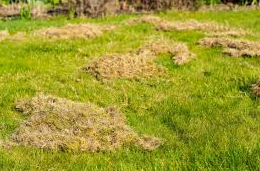
Finally, complete your lawn cleanup by raking up the removed thatch. Add dethatching to your thick grass maintenance routine for the best results.
Common Dethatching Mistakes to Avoid
Avoid common dethatching mistakes such as working during dormancy or the wrong season, using dull tools, removing too much thatch at once, and leaving debris on the lawn after the process.
You can avoid over-dethatching by using the appropriate tools and making measured passes across your lawn. A single pass is enough for a compact lawn, while multiple passes work for larger lawns.
Also note that following these easy dethatching steps is great for lawn damage prevention. However, to ensure proper lawn care after dethatching your lawn, here are some post-dethatching tips to follow.
Post-Dethatching Care for Faster Lawn Recovery
Think of post-dethatch care as actions that accelerate your lawn’s recovery. So, it includes typical lawn care routines for healthy growth, such as overseeding, watering, fertilizing, and aeration. Some of these lawn recovery tips are essential, while others are optional.
Watering
Water your lawn lightly every day for about 1 to 2 weeks to ensure proper soil moisture.
Fertilization
Fertilizing after dethatching speeds up recovery and boosts grass growth. Ensure the NPK ratios are equal for all essential growth nutrients.
Aerating and Overseeding (Optional)
Aeration further breaks up compaction after dethatching. You can also use this overseeding advice when regrowing grass on bare spots.
Topdress your lawn with a thin layer of topsoil, then overseed bare spots to ensure the fertilized, moistened soil does its work and produces lush, green grass.
Proper aftercare strengthens roots and improves long-term lawn density, so don’t skip it.
Conclusion: Maintain a Healthy Lawn with Proper Dethatching
Curating a proper dethatching routine starts with recognizing thatch buildup and countering it. If your goal is long-term lawn health, then seasonal dethatching is essential. This guide contains the information you need for lawn care success through routine dethatching.
Dethatch cool grasses in the early spring or early fall, while warm grasses would recover better in the late spring to early summer. Use sharp, appropriate tools for efficient dethatching, and follow up with adequate aftercare practices as listed above.
Consistent dethatching builds deeper roots and stronger grass for greener lawns. So, add dethatching to your lush yard maintenance routine.