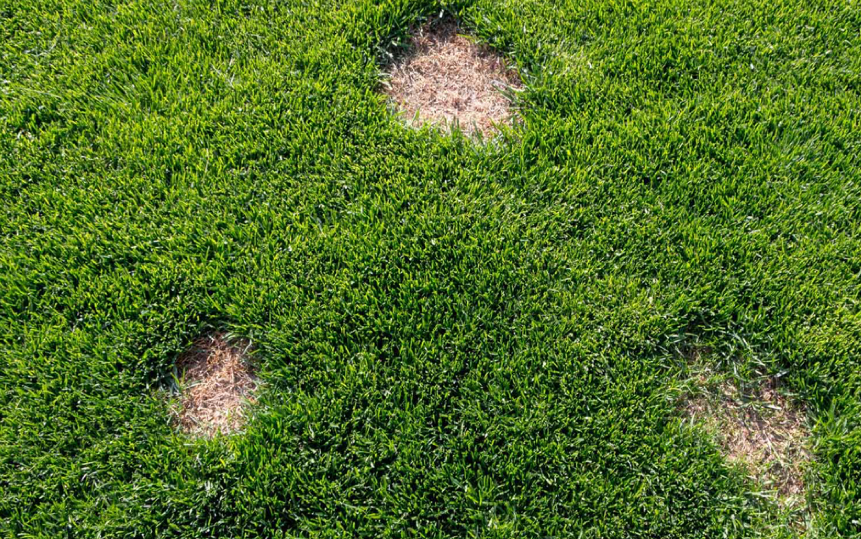
Bare spots on lawns are a common grass growth problem that affects turf appearance and overall health. If you want details on repairing a lawn with bare spots, you’re in the right place.
You can easily fix bare spots in lawns when you understand why and how they exist, and that’s what this lawn patch repair guide will do. It’ll teach you to spot bare spots, understand their causes, follow repair protocols, and apply practical maintenance tips to prevent such defects in the future.
So, here’s how to grow grass in bare areas, starting with identifying the triggers.
Identify What Is Causing the Bare Spots First
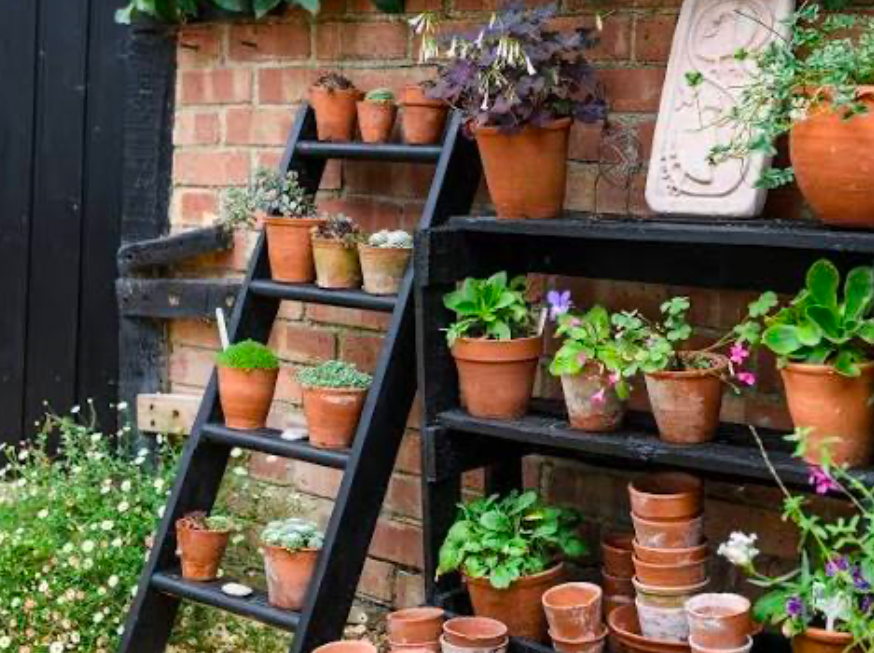
Bare spots on turf don’t pop out of nowhere. If you look closely and study your turf, you notice causes of bare spots in lawns, such as:
- Physical Damage from High Pet and Human Traffic
- Environmental Stress from drought, incompatible climate, low access to sunlight, and poor maintenance
- Pests feed on your grass roots and erode the soil
- Soil compaction is ruining the structure and compatibility
Some reasons for dead grass patches are environmental and natural, while others are artificial. But the common factor in all these lawn damage causes is improper care.
When you don’t prepare properly before installing turf, such as choosing the right grass species for your lawn and providing optimal maintenance, you’ll experience bare patches.
You may wonder why grass dies in patches and not in single spots. That’s because the triggers affect circular zones, not just individual leaves. So, when repairing the bare spot, it’s best to understand the trigger so you can heal the root, not just the surface.
Choose the Right Time of Year for Lawn Repair
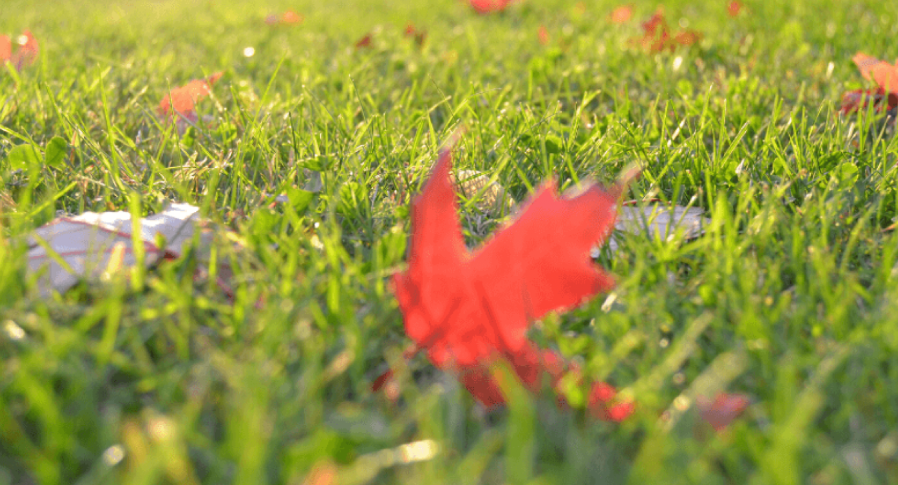
Timing your lawn repair by season is the best way to achieve the fastest, healthiest results. Because when you work with natural grass growth timing, all other environmental factors work in your favor.
The best time to repair lawn patches depends on the kind of grass species on the turf. There are cool-season and warm-season grasses that thrive in different climates, although as a rule of thumb, early Fall is the best season for lawn repair.
The trick to a perfectly timed lawn repair season is to determine when your soil is warmest for strong root establishment. It should also be a period before dormancy or immediately after winter dormancy in the early spring, when the rainfall is moderate, to aid germination.
So, if you’re wondering about when to overseed bare spots, the answer is early Fall or late Spring, shortly before Summer.
Pick Grass Seed That Matches the Existing Lawn
Identify your grass type and match the seed to the lawn
When overseeding your turf, choose lawn repair seed species that match the existing strain. Matching grass seed to lawns provides uniformity and makes establishment easier. Follow these lawn seed selection tips to ensure you’re choosing the right kind of species for your turf.
Tip One: Identify the Existing Grass Type
Grass types differ by texture, color, and growth patterns. Identify the one that best qualifies your turf’s grass to help you determine the kind of grass you’re growing.
Tip Two: Analyze Growth Conditions
Prepare for overseeding by analyzing the growth conditions in your yard. What’s the access to sunlight like? Is there high traffic? Is the climate hot or cool? Knowing this will determine the best grass seed for bare spots in your unique environment.
Warm-season seeds germinate best in Spring while cool-season seeds establish faster in Fall.
Tip Three: Select your Seed
Select the best grass seed that suits your turf by using the answers from the first two tips. See the table below for common grass types and their qualities.
| SEASON | GRASS TYPE | QUALITIES |
Warm | Bermuda | Rough-texture, Small to Medium fine blades, Dark green, Fast spreader |
| Zoysia | Fine-medium blades, Stiff clusters, Dense, Slow-growth (not recommended) | |
| Bahia | Coarse, light-medium green color, V-shape blades | |
| Centipede | Medium blade, light green color, low spread, blunt leaves | |
| St. Augustine | Coarse texture, Wide blades, thick growth, blue-green color | |
Cool | Perennial Ryegrass | Fine-texture, Fast-growth, Shiny (Best for repair) |
| Kentucky Bluegrass | Fine-texture, Spreader, Dark-green, Self-repairing | |
| Tall Fescue | Wide blades, Drought-tolerant, Dark Green | |
| Fine Fescue | Thin blades, Shade-tolerant, Low-maintenance |
You can blend several grass types for the best results, especially if you’re repairing a small patch. But for larger patches, it’s best to stick to one species for uniformity. Also, note that warm-season grass seeds aren’t ideal for repairs because they take a long time to establish.
Prepare the Bare Areas for Better Seed Contact
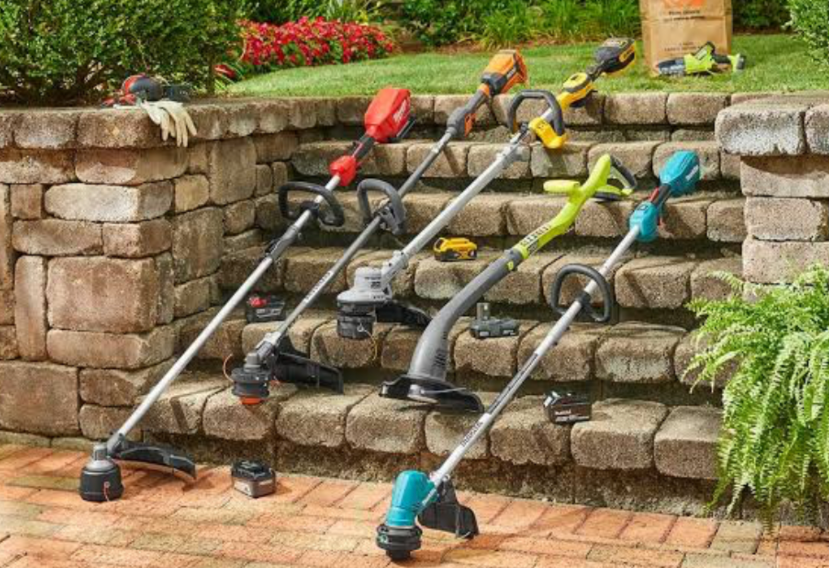
You have to prepare your lawn for overseeding to ensure the process works efficiently. That includes mowing the area, removing debris, loosening the soil, and leveling uneven spots.
Mowing and Removing Debris
Start your bare spot lawn prep by clearing the area, then mowing the existing grass to a reasonable height, about 1 inch above ground. Clear the mowed lawn debris to allow seed-to-soil contact.
Loosen and Level the Soil
Use a hand fork in small areas and a garden rake or fork to loosen soil for grass seed distribution. Break up about 1-2 inches of soil to ensure better soil-to-seed contact.
Leveling uneven spots allows your seed distribution to spread evenly, so new growth matches the existing grass.
Keep reading for more seed-to-soil contact tips.
Overseed the Bare Spots the Right Way
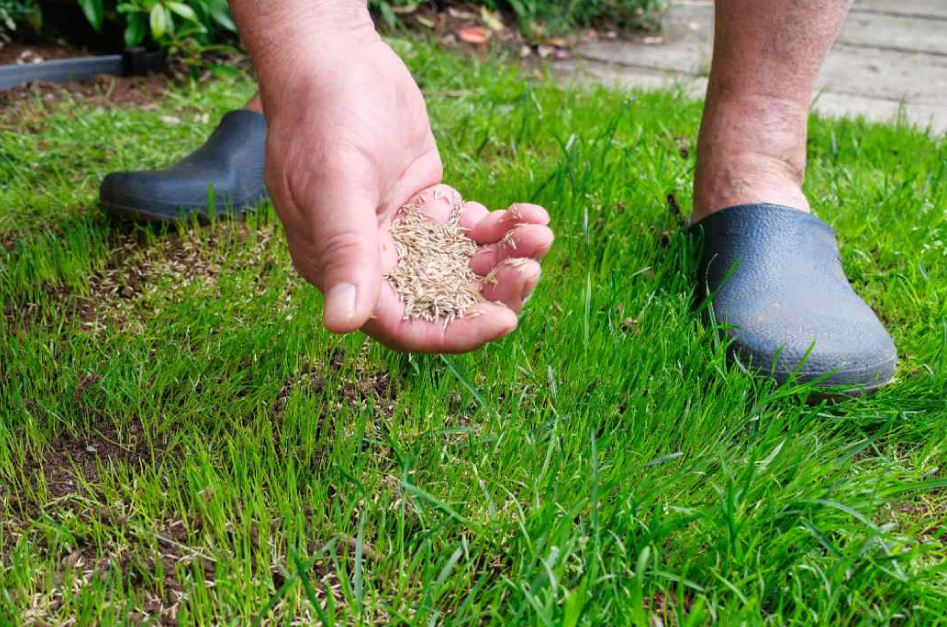
Knowing how to overseed bare spots is another underrated skill for repairing lawns. When you patch lawns with grass seed, you must ensure even distribution, complete coverage without losing the seeds in the ground, and proper aftercare.
Follow these practical lawn overseeding steps.
Before you overseed bare lawn areas, it’s a good idea to amend the soil with compost or a high-quality topsoil mix. Then spread the seed across the bare spot, using the loosened soil.
To ensure contact with the soil without burying too deeply, use a rake to lightly push the soil to a depth of ⅛ to ¼ inch. Add a good, phosphorus-rich fertilizer to promote speedy root development, and cover the overseeded area with firm soil.
Water New Grass Carefully So It Can Establish
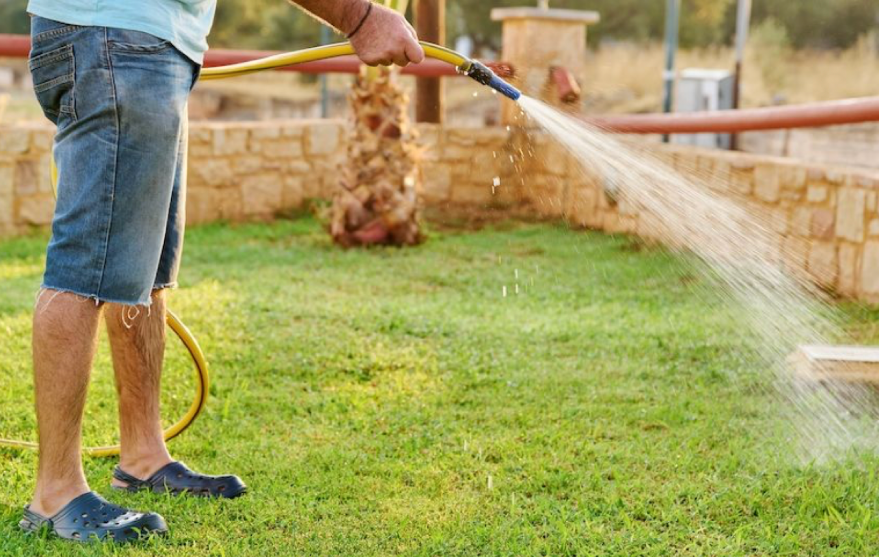
Water lightly in the first few weeks of growth
Post-overseeding care is as important as the prep and main action, and it starts with watering bare spots after seeding.
You need to water your newly seeded areas to help them develop strong roots. But you must learn how to water new grass because it’s a different technique from watering already established grass.
A lawn patch watering schedule starts with light, frequent watering in the first few weeks, then transitions to a deep, infrequent routine as the roots develop.
Light, frequent watering in the initial stage is ideal, as the seedling is sensitive and prone to drowning in excess moisture. But once the roots develop, it’ll need more water to establish.
Follow these seed-germination watering tips to avoid over- or underwatering your grass.
Care for the Area Properly After the Grass Starts Growing
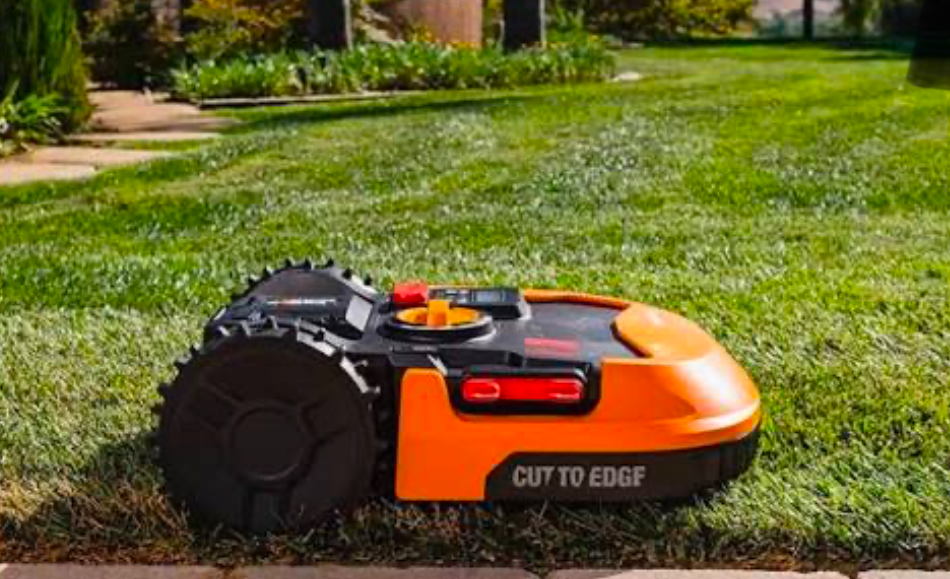
After germination, you must protect new lawn growth to ensure it develops into a healthy, thick turf. Allow the seedlings to grow to about 2 to 3 inches tall so you can safely mow the new grass to a 1-inch height.
You can choose to fertilize repaired lawn spots if you didn’t apply fertilizer before overseeding. Use a phosphorus-rich, slow-release fertilizer for the best results. Turf care after overseeding the lawn also includes sealing off the area to protect it from traffic while the grass is growing. Provide aftercare immediately to ensure long-term patch success.
Avoid Common Bare Spot Repair Mistakes
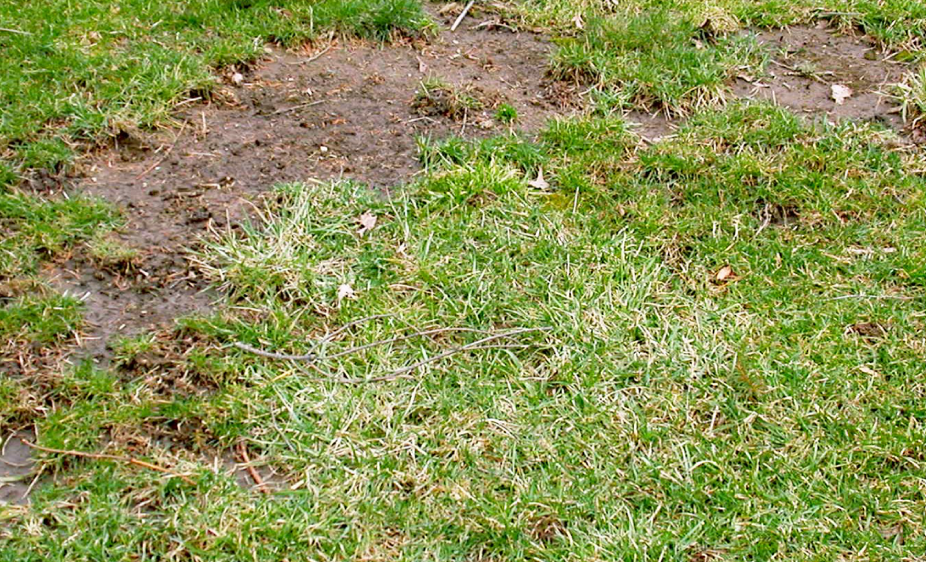
Be careful not to make common lawn repair mistakes such as using too much seed, skipping soil prep, watering inconsistently, or repairing at the wrong time of year. These are the reasons why lawn patching fails.
Poorly timing your repair season will have you working harder than necessary to establish your need seed. With improper prep and after care, you’ll face overseeding problems like dying seedlings, patchy growth, poor germination, and stunted growth.
When you fail to fix bare lawn spots correctly, you slow recovery or end up with patchy results. So, follow this guide completely.
Know When It Makes Sense to Call a Lawn Professional
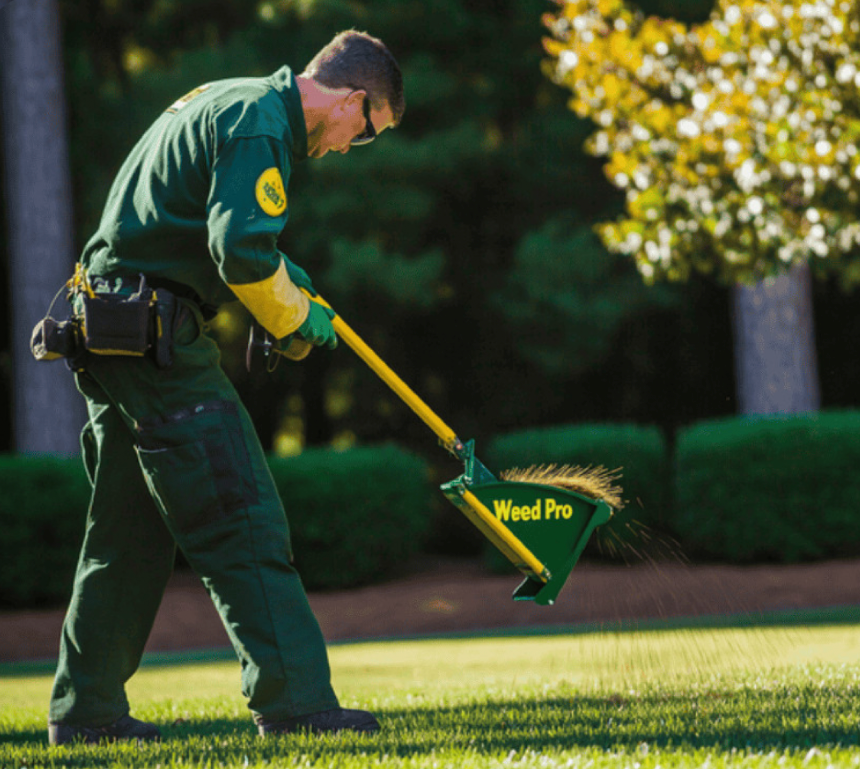
Knowing when to call lawn care experts will save you from wasted time and effort.
If you have severe or recurring bare spots in the lawn, that’s a sign of deeper issues such as pest infestation, disease, drainage problems, or poor soil conditions.
You will need professional lawn repair advice at this point to identify the cause and address the problem at its root. You can seek lawn disease or pest control help from professional exterminators and gardening maintenance experts in your locality.
Build Long-Term Habits That Prevent Bare Spots From Returning

Did you know that you can prevent bare spots in lawns? Add long-term lawn-health tips to your turf-maintenance routine to reduce the risk of bare spots. These healthy thick lawn care habits include:
- Proper mowing
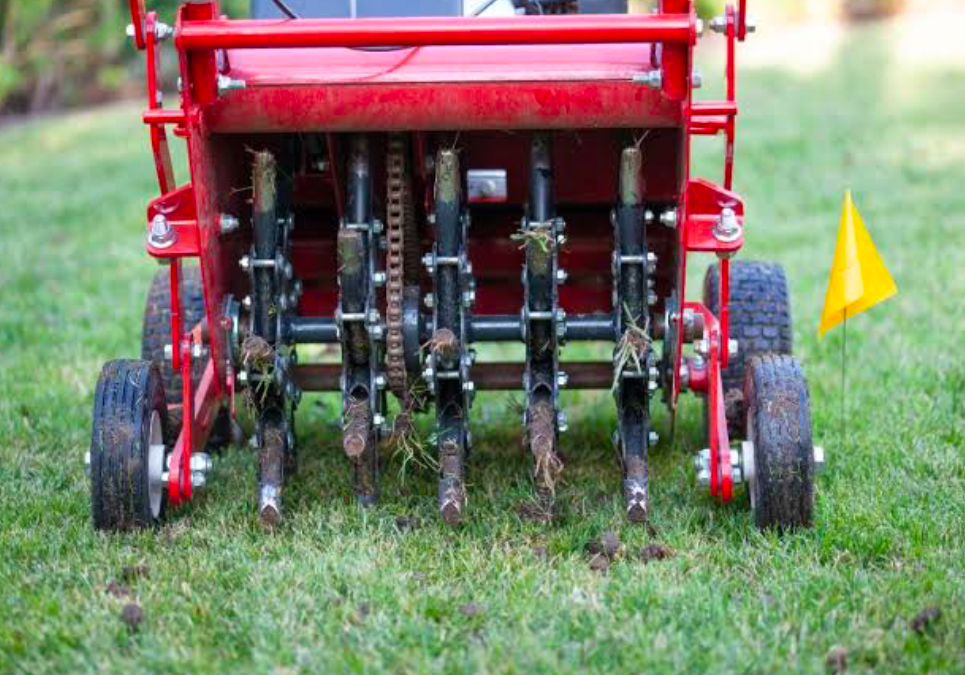
- Regular aeration
- Smart watering
- Seasonal feeding with fertilizer, and
- Reducing stress on worn areas.
Prevention is just as important as repair to stop grass from thinning and encourage healthy, thick growth.
Conclusion
In this lawn bare spot repair guide, you’ve seen that you need the right timing, seed choice, and follow-up care to achieve success. You can repair patchy grass naturally without compromising your soil’s health and structure, and the environment.
Use the thicker lawn tips listed in this guide, including pre-repair prep, proper overseeding techniques, and aftercare, for the best results.
Healthy lawn recovery is very achievable with consistent attention and deliberate action. All you need is dedication to the task and the wisdom to call a professional when the problem becomes recurrent.